
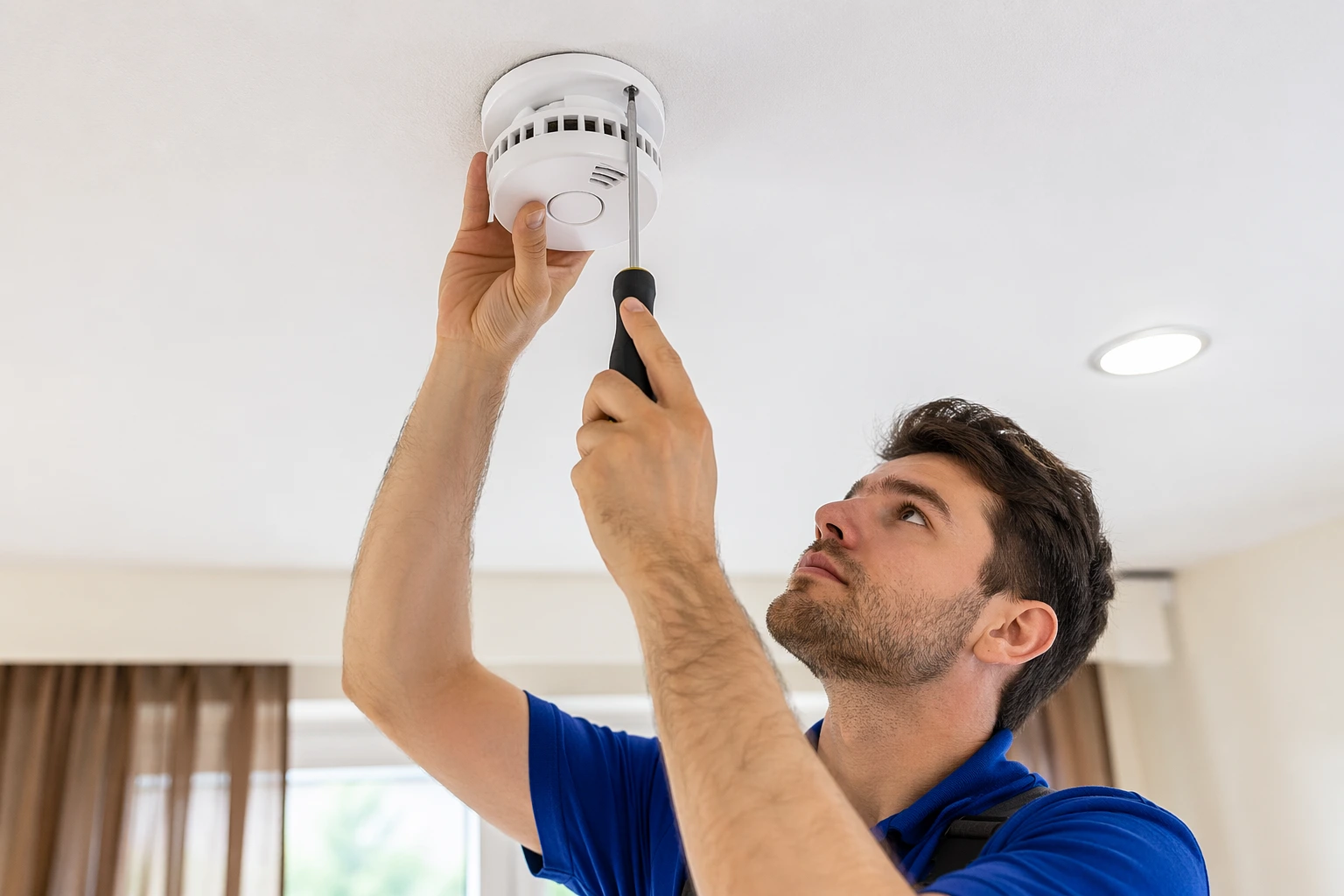
Thousands of houses around Sydney are at risk of house fires every year, and the Smoke Alarm Installation is an important part of house safety that must be considered by all households. A well-placed and working smoke detector can reduce your chances of dying in a house fire by literally half. This points out the fact that a small device, when used properly, can save a life.
In addition to safety, Smoke Alarm Installation is also legal in New South Wales. These are regulations that are implemented to make sure that all residents have the best opportunity of early detection in case there is a fire. Not doing this may not only endanger lives but may also result in legal penalties.
The threat of fire is equally tangible even in less densely populated areas of Sydney, such as the western and northern suburbs. This is the reason why professional Smoke Alarm Installation is necessary- it guarantees that the alarms are installed in the right location, tested properly, and fully meet safety requirements, with peace of mind given to the homeowners.
Among the most crucial reasons why Smoke Alarms should be installed properly is the fact that people are frequently unable to sense the presence of smoke when they are sleeping. When it comes to investing in smoke alarm systems that can be trusted, it is not only about compliance, but about saving lives and making sure that your house is ready in case of an unexpected event.
The Main advantages of Smoke Alarm Installation in Sydney
The smartest and most effective safety choice that you can make for your home is a smoke alarm installation in Sydney. It is not merely about regulation compliance, but saving lives, property, and peace of mind. The following is an informative and detailed overview of the major gains:
1. Early Warning Saves Life: An installed smoke alarm will sense smoke even during the early smouldering of a fire, in most cases before the flames appear. The fires may spread within minutes; hence, having a smoke alarm installation in Sydney helps ensure that you are notified before the situation turns out to be life-threatening.
2. Minimizes Risk of Fatalities: Statistical data always indicate that houses that have functioning smoke alarms reduce the chances of fire fatality by almost 50 percent. An effective smoke detector installation in Sydney is your permanent safety guard that would dramatically increase your chances of escaping safely.
3. Assures NSW Legal Compliance: The law in New South Wales mandates the installation of smoke alarms in all levels of your house. It will help you to make sure that your property is in compliance with all legal requirements, and you will be able to avoid fines and also keep your tenants safe as a landlord.
4. Provides Peace of Mind: The fact that you have a home with a working smoke alarm is a great source of security. You can rest, be at work or holidaying and be sure that your house has an early warning system. Reliable installation of a smoke alarm in Sydney will enable you to sleep peacefully knowing that your loved ones are safe 24 hours a day.
Legal Requirements for Alarm Installation in NSW
| Category | Requirement / Rule | Details |
| Minimum Installation | Smoke alarms per level | At least one smoke alarm must be installed on every level of the home, including basements and upper floors. |
| Placement | Location inside the home | Alarms should be installed in hallways outside bedrooms or between living and sleeping areas to ensure occupants can hear them. |
| Rental Property Rules | Landlord responsibility | Landlords must ensure smoke alarms are installed and always in working condition. |
| Repair Timeline | Faulty alarms | Landlords must repair or replace faulty alarms within 2 business days. |
| Maintenance | Regular checks | Smoke alarms must be tested at least once every year. |
| Replacement | Lifespan of alarms | Smoke alarms must be replaced if they are more than 10 years old. |
| Access Notice | Entry to the property | Landlords must provide notice to tenants before entering to inspect or fix alarms. |
| Tenant Responsibility | Reporting issues | Tenants must promptly report any faults, damage, or battery warnings to the landlord. |
| Compliance Standard | Australian Standard | Smoke alarms must comply with AS3786 (Australian Standard). |
| Product Requirement | Approved alarms | Only use alarms certified for Australia, typically marked as AS3786 compliant and sold by reputable suppliers. |
Smoke Alarm Installation in West and North Sydney: Local Guidelines
In Sydney’s west and north, from Parramatta and Epping to Castle Hill and Manly, homes come in all shapes and sizes. No matter the style, NSW’s smoke alarm rules apply equally. Every home where someone sleeps needs alarms on every floor.
Fire and Rescue NSW recommends placing alarms in hallways near bedrooms, especially if bedrooms are split across different wings of the house. In multi-level homes, this usually means one alarm on each storey, placed so its sound can reach sleeping areas quickly. In compact apartments or units, make sure there’s at least one alarm outside each bedroom or living area.
For specifics, you can refer to the NSW Government’s official smoke alarm regulations. These guidelines explain exactly where and how alarms must be installed. NSW smoke alarm legislation covers all the details. For example, portable homes and caravans also need smoke alarms in sleeping areas.
How to Install and Maintain Your Smoke Alarms
Getting smoke alarms set up is a DIY-friendly task for most battery-powered models. First, decide on the type of alarm. Photoelectric, mains-powered alarms with battery backup are the “gold standard”. These are highly sensitive and will catch smouldering fires early. However, they must be hard-wired by a licensed electrician.
For an easier route, consider 10-year lithium battery alarms. They have batteries sealed inside that last a full decade, so you’ll never have to hunt for replacements. Avoid putting them directly above ovens or showers, as steam can trigger false alarms.
Installation steps:
- Choose placement: Aim for the ceiling in hallways, outside bedrooms, or central living areas.
- Mount the base: Use screws and anchors (often included) to secure the alarm base to a solid spot.
- Attach the alarm: For a battery unit, snap the alarm unit into the base. For mains units, follow the electrician’s instructions to connect the wiring and mount the unit.
- Test it: Press the test button after installation – the alarm should sound loudly immediately.
Remember to test every alarm every month by holding the test button for five seconds. A loud beep confirms it’s working. If it doesn’t sound, replace the battery. Finally, replace every alarm unit after 10 years (or sooner if the manufacturer advises).
| Maintenance Task | Frequency |
| Test the alarm (press the TEST button) | Monthly |
| Replace battery (non-sealed alarms) | Yearly (or per manufacturer) |
| Clean/vacuum the alarm | Every 6–12 months |
| Replace the entire alarm unit | Every 10 years |
Following this schedule makes sure your alarms are always ready. In NSW, remember that batteries should be replaced every year (unless using a sealed 10-year alarm).
Types of Smoke Alarms: Choosing the Best One
When you buy smoke alarms, you’ll see a few types:
- Photoelectric alarms: Best choice for home use. These are very sensitive to the kind of smoke that comes from smouldering fabrics or upholstery. Photoelectric alarms respond quickly to slow, smoky fires, giving maximum warning.
- Ionization alarms: These detect fast-flaming fires but are prone to false alarms from cooking. They’re less common in Australia now. If you use them, avoid placing them near kitchens or bathrooms.
- 10-year lithium battery alarms: A great convenience option. They use a long-life battery sealed inside, so no annual battery changes. They’re especially handy for upstairs levels, hallways, or rentals.
- Combination alarms: Some units have both photoelectric and ionization sensors, or even include carbon monoxide detection. These can be useful in complex homes, though simple, dedicated smoke alarms are often fine.
Also, consider alarms with a “hush” button – it silences nuisance alarms (like from dust) without needing to remove the battery. And check if the model has a “test” button so you can easily verify it’s alive.
Smoke Alarm Installation Requirements in NSW
In NSW, every home must have at least one working smoke alarm installed on each level, and the alarms must meet Australian Standard AS 3786. Landlords must check that alarms are working each year and replace batteries or alarms when needed. New homes and major renovations need hardwired, interconnected alarms under the National Construction Code.
Hardwired vs Battery Smoke Alarms
Hardwired (240V) smoke alarms with a 10-year lithium backup battery are the most reliable choice. They don’t rely on you remembering to change batteries, and they can be interconnected so every alarm sounds when one detects smoke. A licensed electrician must install hardwired alarms. FMZ Electrical installs and replaces photoelectric smoke alarms across Sydney and the Hills District, often during a switchboard upgrade or electrical safety inspection.
Conclusion
Smoke Alarm Installation is not optional; it’s essential. Every Sydney homeowner should see it as a top priority. The combination of legal requirements and hard data makes this clear: a properly installed, working smoke alarm can save your life.
Here’s a quick wrap-up: Ensure you have at least one alarm on each floor, placed between bedrooms and the rest of the house. Pick alarms that meet Australian standards (AS3786) and consider interconnecting them for full coverage. Plan and practice your escape route at the same time; an alarm only helps if you know where to go when it sounds.
Don’t wait until it’s too late. Check your home today, install new alarms or replace old ones, and test them immediately. If you’re unsure, book a Fire and Rescue NSW Home Safety Visit (or hire a licensed electrician. Your family’s safety is worth it. Get in touch today to book a professional inspection or installation service and ensure your home meets all safety requirements.
FAQs:
What is so important about smoke alarm installation?
The installation of a smoke alarm in Sydney is important as it gives you early warning in the event of a fire, allowing you time to evacuate safely. Research indicates that working alarms have the potential to reduce the chances of death in a domestic fire by half, particularly during the night when smoke may not be felt.
Do NSW laws require Smoke Alarm Installation?
Yes, all homes in NSW are legally obliged to have smoke alarms. There should be at least one operational alarm per level of the property. Landlords have to have alarms tested annually and maintain them in good condition in rentals.
How many smoke detectors are required to install Smoke Alarms?
To be safely effective, have at least one smoke detector on each floor. There are other alarms to be installed outside bedrooms or sleeping quarters. This is to make sure that it is detected early and alerts people when they are asleep.
How often do you test/replace smoke alarms following Smoke Alarm Installation?
Smoke alarms are to be tested every month with the help of the test button. Wash them once or twice a year and change batteries once a year, where necessary. All the units must be changed every 10 years to ensure good performance.
