
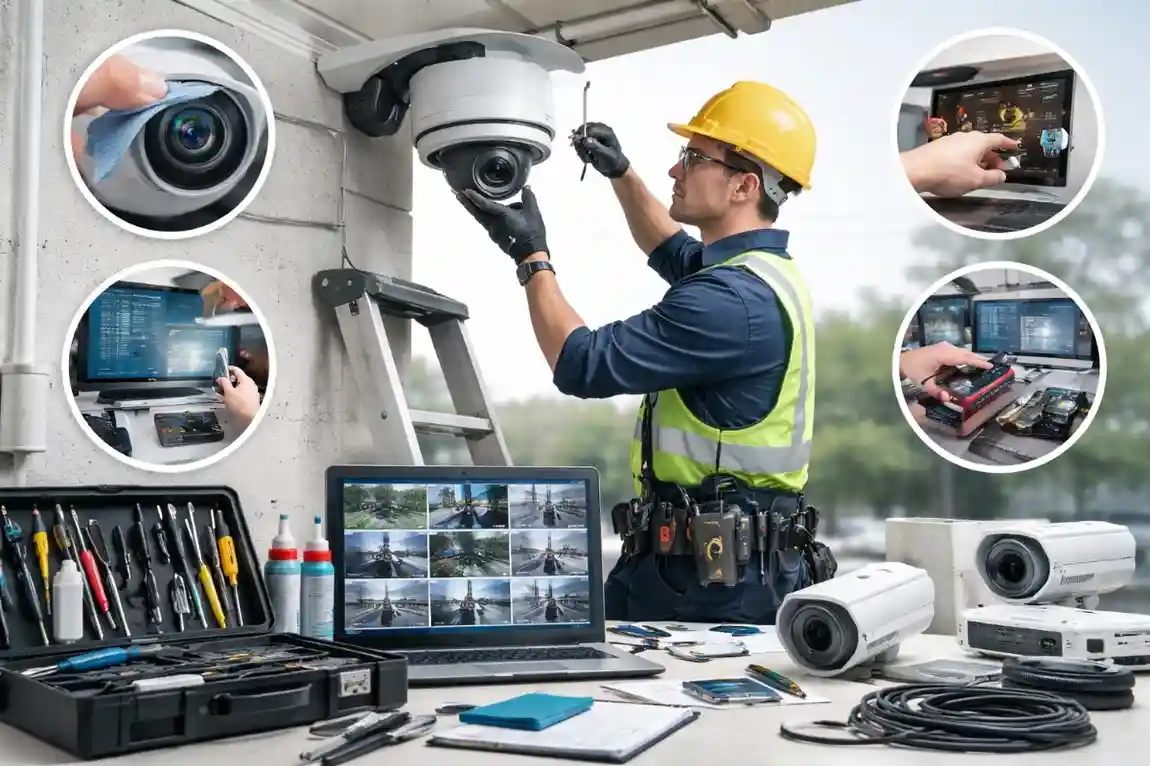
A CCTV system is one of those things you barely notice when it works perfectly. The cameras sit quietly on walls and ceilings, recording day after day. Then one morning you need to check an incident and discover that one camera has been offline for three weeks. Brilliant timing.
That is exactly why CCTV Camera Maintenance matters. Regular servicing helps identify dirty lenses, damaged cables, storage problems, camera faults, connectivity issues and other problems before they leave you without useful footage. For Sydney homes and businesses, professional electrical and security services from FMZ Electrical can help keep surveillance systems operating reliably.
What Is CCTV Camera Maintenance?
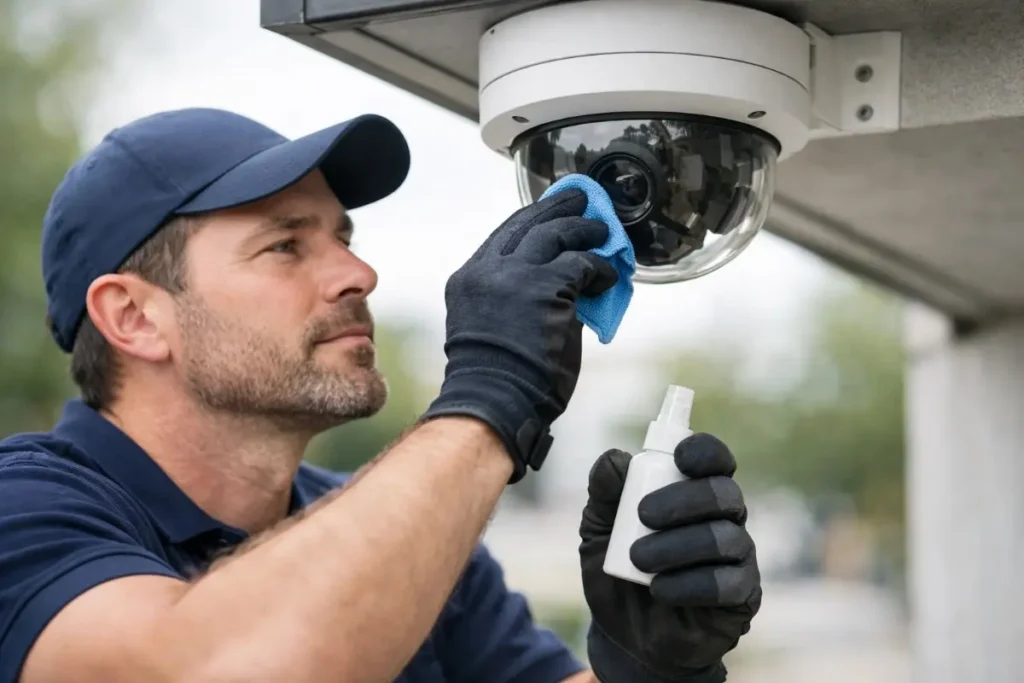
CCTV Camera Maintenance is the routine inspection, testing, cleaning and servicing of a surveillance system to keep cameras, recording equipment, cabling, network connections and associated components operating properly.
It is more than wiping dust from a camera lens. A complete service examines the system as a whole. The technician may check image quality, camera positioning, recording performance, storage capacity, connections, power supplies and remote viewing.
CCTV maintenance services are particularly useful for businesses where cameras are expected to provide reliable evidence during incidents. A camera that looks fine from the outside can still have a failed connection, recording problem or storage issue behind the scenes.
Regular CCTV Camera Maintenance also gives property owners an opportunity to identify ageing equipment before it becomes a complete failure.
Why Is CCTV Camera Maintenance Important?
The purpose of CCTV is simple: capture useful footage when you need it. If the system is not recording properly, the entire investment becomes much less valuable.
CCTV Camera Maintenance helps identify issues such as cameras going offline, blurry images, incorrect time settings, damaged cables and insufficient recording capacity. These problems can develop gradually, meaning you may not notice them during everyday use.
For a Sydney business, that can be especially frustrating. You might have ten cameras installed, but if one critical entrance camera stopped recording last month, the number of working cameras elsewhere does not solve the problem.
A maintenance programme creates a more proactive approach. Instead of discovering a problem after an incident, you have a better chance of finding it during a scheduled inspection.
What Does a Typical CCTV Maintenance Service Include?
A professional CCTV Camera Maintenance visit should examine more than the camera itself. The technician should consider the complete surveillance system and how its individual components work together.
The exact scope varies depending on the system, but a typical service may include:
- Physical inspection of cameras and mounting points
- Lens cleaning and image-quality checks
- Camera positioning and focus checks
- Testing of recording equipment
- Checking hard-drive or storage performance
- Inspection of power supplies and connections
- Testing network connectivity and remote viewing
- Checking cables, connectors and visible damage
- Reviewing date and time settings
- Testing system functions and identifying faults
CCTV Camera Maintenance should be adapted to the age, size and complexity of the installation. A small residential system does not necessarily require the same level of servicing as a multi-camera commercial installation.
CCTV Security Camera Maintenance Starts With the Camera
The camera is the part of the system everyone can see, so it makes sense that CCTV security camera maintenance begins there.
Outdoor cameras can accumulate dust, salt residue, insects, cobwebs and other debris. Sydney’s weather can also expose outdoor equipment to rain, humidity and temperature changes.
A dirty lens can reduce image clarity, particularly at night. Small obstructions may not seem serious during daylight but can make faces, number plates or other important details harder to identify.
The technician should also check whether the camera has shifted from its intended position. A few degrees of movement can change the field of view enough to leave a doorway, driveway or other important area partially unprotected.
Checking CCTV Camera Image Quality
Image quality should be tested during CCTV Camera Maintenance rather than simply assumed to be fine.
A technician can check whether cameras are producing clear images during daytime and, where relevant, low-light or infrared conditions. Exposure, focus, contrast and positioning can affect what the camera actually captures.
Night vision deserves particular attention. A camera may produce excellent daytime footage but struggle after dark because of dirty lenses, incorrect positioning, infrared reflections or environmental conditions.
This is where professional CCTV Camera Maintenance becomes more useful than simply opening an app and checking whether the camera appears online. An online camera can still produce poor or unusable footage.
Checking Camera Position and Coverage
CCTV Camera Maintenance should also confirm that cameras are still covering the areas they were originally intended to monitor.
Building changes, landscaping, new signs, parked vehicles and construction can gradually affect camera coverage. A tree that was tiny when the system was installed can eventually become a surprisingly effective privacy screen — for the wrong person.
Technicians can check whether important entry points, access paths, parking areas and other monitored zones remain within the camera’s field of view.
If a camera has moved, the technician can determine whether it can be repositioned or whether a different camera angle or additional camera would provide better coverage.
Inspecting CCTV Cabling and Connections
Cabling is one of the less glamorous parts of CCTV Camera Maintenance, but it is critical.
A camera may be perfectly functional while a damaged cable, loose connector or degraded connection prevents reliable communication with the recorder or network.
Outdoor cables can be exposed to weather, pests and physical damage. Indoor cables can also be affected by renovations, accidental impacts or poor previous installation practices.
During CCTV Camera Maintenance, visible cable routes, connectors and termination points should be checked where accessible. Any signs of deterioration, loose connections or physical damage should be investigated rather than ignored.
Testing the CCTV Recording System
A camera showing a live image does not necessarily mean the system is recording correctly.
One of the most important parts of CCTV Camera Maintenance is checking whether footage is actually being recorded and stored as expected.
The technician can review recording status, confirm that cameras are writing footage to the recording system and check whether scheduled or motion-based recording settings are functioning correctly.
This distinction matters. A live feed can look perfect while the recording function has failed. Discovering that after a security incident is not an experience anyone wants.
Checking CCTV Storage and Hard Drives
Modern CCTV systems can store enormous amounts of video, but storage capacity is not unlimited.
CCTV Camera Maintenance can include checking available storage, recording retention and the health of relevant storage hardware. The technician can also assess whether the system is retaining footage for the period expected by the property owner.
Storage requirements depend on the number of cameras, resolution, frame rate, recording method and retention period. Motion-based recording can use storage differently from continuous recording.
If your business has changed how it uses CCTV, the original storage configuration may no longer be appropriate. Adding cameras or increasing resolution can also increase storage requirements significantly.
Network and Remote Viewing Checks
Many modern CCTV systems connect to a network so owners can view cameras remotely through a computer or mobile device.
That convenience introduces another part of CCTV Camera Maintenance: connectivity.
The technician may check whether cameras communicate correctly with the network, whether remote viewing works and whether the recorder can communicate with authorised devices.
A system can also appear functional locally while remote access has stopped working. Network changes, router replacements, software updates and configuration changes can all affect connectivity.
Professional CCTV maintenance services should therefore consider the network side of the system rather than treating cameras as completely independent devices.
CCTV Camera Maintenance and Power Supply Checks
Every camera needs reliable power. Depending on the system, power may be supplied through dedicated cabling, local power supplies, PoE networking equipment or another arrangement.
A technician performing CCTV Camera Maintenance can inspect relevant power connections and identify signs of instability, damage or failure.
Intermittent power can create particularly annoying problems. A camera may disappear from the system for a few minutes, reconnect and appear normal again, making the fault difficult to identify without proper testing.
For larger systems, technicians may also need to consider the condition and capacity of network switches, power distribution equipment and other supporting hardware.
CCTV Repair and Maintenance: Fixing Problems Before They Grow
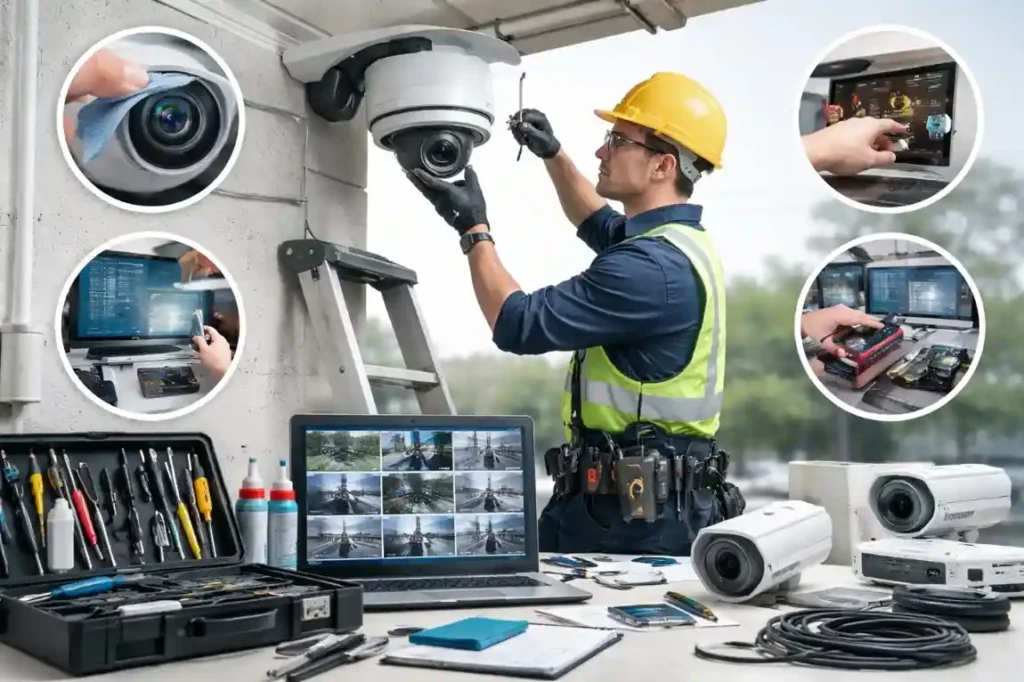
CCTV repair and maintenance are closely connected, but they are not exactly the same thing.
Maintenance is proactive. It aims to identify and address issues before they become major failures. Repair is generally reactive and involves fixing a component or system that has already developed a fault.
A good CCTV Camera Maintenance programme can uncover small problems before they require a more extensive repair. For example, a damaged connector may be relatively straightforward to replace, while ignoring intermittent connectivity for months could eventually result in complete camera failure.
The best approach combines both. Inspect regularly, repair problems properly and replace equipment when continued repair no longer makes practical sense.
Testing Motion Detection and Recording Settings
Motion detection can be useful because it allows a system to record when activity occurs rather than continuously recording everything.
However, settings can change over time. Sensitivity may be too high, creating hours of footage from moving trees and passing shadows, or too low, meaning important activity may not trigger recording.
CCTV Camera Maintenance can include reviewing motion detection and recording settings to ensure they remain appropriate for the property’s environment.
This is particularly important for outdoor cameras. Sydney weather, changing sunlight and moving vegetation can all influence how motion detection behaves.
Checking Date and Time Accuracy
It sounds minor, but accurate date and time settings are essential for useful CCTV footage.
Imagine trying to locate an incident and discovering the recorder’s clock is several hours wrong. Suddenly your investigation has become a rather tedious maths exercise.
CCTV Camera Maintenance should include checking system time and ensuring cameras and recording equipment are properly synchronised where applicable.
Accurate timestamps make recorded footage easier to search, compare with other events and use as part of an incident investigation.
CCTV Camera Maintenance for Sydney Businesses
Businesses generally have more to consider than a homeowner with a small residential CCTV system.
A retail store may need reliable coverage of entrances, registers and stock areas. A warehouse might focus on loading areas, access points and perimeter zones. An office may use cameras around entrances, car parks and shared spaces.
For these environments, CCTV Camera Maintenance should be based on the system’s operational importance.
If a camera covers a critical entrance, its availability matters more than a camera watching a low-risk area. Maintenance priorities can therefore be influenced by the purpose of each camera rather than treating every device identically.
Privacy Considerations for CCTV Systems in Australia
Maintenance is also a good opportunity for businesses to review how their CCTV system collects and stores personal information.
The Office of the Australian Information Commissioner explains that organisations covered by the Privacy Act that use surveillance cameras generally have obligations relating to personal information captured through those cameras. These include appropriate notification and secure handling of recorded information.
For businesses, the OAIC guidance on security cameras and privacy is a useful authoritative reference. State and territory surveillance laws may also apply depending on the circumstances.
CCTV Camera Maintenance should not be treated as a substitute for legal advice, but checking camera positioning, access controls and recording practices can form part of responsible system management.
How Often Should CCTV Camera Maintenance Be Performed?
There is no universal maintenance interval that suits every CCTV installation.
A small indoor residential system may require less frequent professional attention than a large commercial installation with dozens of outdoor cameras operating in demanding conditions.
The right schedule depends on factors such as camera exposure, environment, system size, recording importance and equipment age.
As a practical approach, businesses with security-critical CCTV should consider scheduled inspections rather than waiting for a camera to fail. Properties with outdoor cameras may also benefit from more frequent visual checks because weather and environmental conditions can affect equipment.
CCTV Camera Maintenance for Older Systems
Older CCTV systems deserve particular attention because technology and expectations change quickly.
A system that was excellent several years ago may now have limited resolution, ageing storage hardware, outdated networking equipment or poor remote-access capabilities.
CCTV Camera Maintenance can help determine whether an older system remains fit for purpose or whether certain components should be upgraded.
Sometimes replacing one failed camera makes sense. In other cases, continued repairs become difficult to justify because several components are approaching the end of their useful service life.
The decision should be based on reliability, performance, security requirements and total cost rather than age alone.
When CCTV Maintenance Should Become CCTV Repair
Some problems cannot be solved through cleaning or adjustment.
If a camera has failed internally, a recorder has a damaged storage device or cabling has deteriorated significantly, replacement or repair may be necessary.
A professional technician can determine whether the component can be repaired economically or whether replacement is the more sensible option.
This is where experienced CCTV Camera Maintenance becomes valuable. The objective is not to repair everything at any cost. It is to restore reliable surveillance using the most appropriate solution for the system.
How to Choose CCTV Maintenance Services in Sydney
When choosing CCTV maintenance services, look for a provider that understands both electrical and security-system requirements.
Ask what the service actually includes. A vague promise to “check the cameras” does not tell you whether the technician will test recording, storage, cabling, network access and image quality.
It is also worth asking whether faults discovered during the inspection can be repaired by the same team. This can make the process more efficient because the technician already understands the system.
FMZ Electrical provides electrical and data-related services in Sydney, making it relevant for property owners looking for professional assistance with connected security infrastructure.
What You Should Receive After Maintenance
A useful maintenance service should leave you with a clearer understanding of the condition of your CCTV system.
Depending on the provider and service agreement, this may include a record of inspected equipment, identified faults, completed repairs and recommendations for future work.
For larger commercial systems, documenting maintenance can make future troubleshooting easier. It can also help property managers understand which cameras have recurring issues and which equipment may eventually need replacement.
The best CCTV Camera Maintenance service does not simply leave you with a bill. It gives you confidence that the system has been properly checked.
Conclusion
CCTV Camera Maintenance is about making sure your surveillance system actually performs when you need it. A proper service can cover camera cleaning, image quality, positioning, cabling, recording, storage, network connectivity, power supplies and system settings. Regular inspections can also identify developing faults before they become expensive failures. For Sydney homes and businesses, maintenance should be treated as part of responsible security-system management rather than something to consider only after a camera stops working.
If your CCTV system has cameras that are offline, blurry footage, recording problems or equipment that has simply been running for years without a professional inspection, FMZ Electrical can help. Contact FMZ Electrical to discuss CCTV Camera Maintenance, CCTV repair and maintenance or other electrical and data requirements for your Sydney property. A properly maintained system is far more useful than a wall full of cameras that only look busy.
Frequently Asked Questions
1. What is included in CCTV Camera Maintenance?
CCTV Camera Maintenance typically includes checking camera condition, cleaning lenses, testing image quality, inspecting cables and connections, checking recording performance, reviewing storage, testing network connectivity and identifying faults. The exact scope depends on the size and configuration of the CCTV system.
2. How often should CCTV security camera maintenance be performed?
The ideal frequency depends on the environment, camera type, system size and importance of the footage. Commercial systems and outdoor cameras may require more regular attention than small indoor residential installations. A professional technician can recommend a suitable schedule after assessing the system.
3. Can CCTV Camera Maintenance prevent camera failures?
Regular maintenance cannot guarantee that equipment will never fail, but it can identify developing problems before they become complete failures. Cleaning, testing, cable inspection and storage checks can help detect issues that may otherwise remain unnoticed.
4. What is the difference between CCTV maintenance and CCTV repair?
Maintenance is generally proactive and involves inspecting and servicing a system to keep it operating properly. CCTV repair and maintenance can work together, but repair usually addresses an identified fault, such as a failed camera, damaged cable, defective recorder or storage problem.
5. Is professional CCTV maintenance necessary for businesses?
Professional CCTV maintenance can be particularly valuable for businesses that depend on surveillance footage for security, incident investigation or operational monitoring. A professional inspection can identify problems that may not be obvious from simply checking whether cameras appear online.
